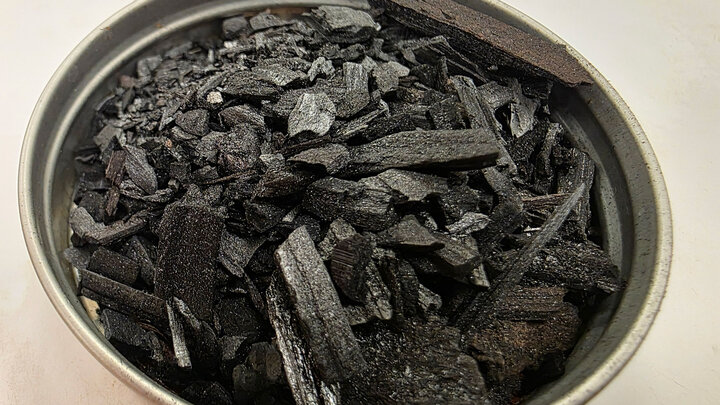
Nebraska researchers are taking biochar research from experimental plots to producer fields, connecting ranchers removing eastern redcedar with farmers who can put locally produced biochar to use.
Biochar is a carbon-rich, porous material produced through pyrolysis, a process that heats organic matter in a low-oxygen environment. Research at the University of Nebraska–Lincoln indicates that biochar can improve soil carbon and nitrogen retention, reduce organic waste, and improve soil water-holding capacity.
Eastern redcedar encroachment threatens native grassland ecosystems, reduces forage availability and increases wildfire risk. Converting removed trees into biochar offers a potential way to address these challenges while creating a valuable soil amendment.

A stack of removed eastern redcedar sits in a field.
Tree professionals, ranchers, farmers, educators and members of the public are invited to the second annual Biochar Field Day from 11 a.m. to 3 p.m., Nov. 3 at a farm near Conestoga Lake by Denton, Nebraska.
The event will explore what biochar is, how it is used and how to produce it from removed eastern redcedar. Participants will also learn how biochar can improve soil health and support more resource-efficient crop production.
Experts will demonstrate on-site biochar production using a mobile Charboss™ unit from Sandhills Biochar, providing guidance and educational opportunities throughout the process.
“The field day is part of a broader effort to build a farmer-rancher network to scale up redcedar-derived biochar production and application,” said Michael Kaiser, associate professor in agronomy and horticulture.
Participants are encouraged to carpool, wear closed-toe shoes or boots, and bring water, lunch and a camp chair.
“We look forward to discussing and exchanging information and experiences on biochar production and application,” Kaiser said.
Participants should register here.
The Department of Agronomy and Horticulture and the Reinkordt Family will host the event, organized in collaboration with the Nebraska Forest Service, Sandhills Biochar and the Nebraska Biochar Initiative.


