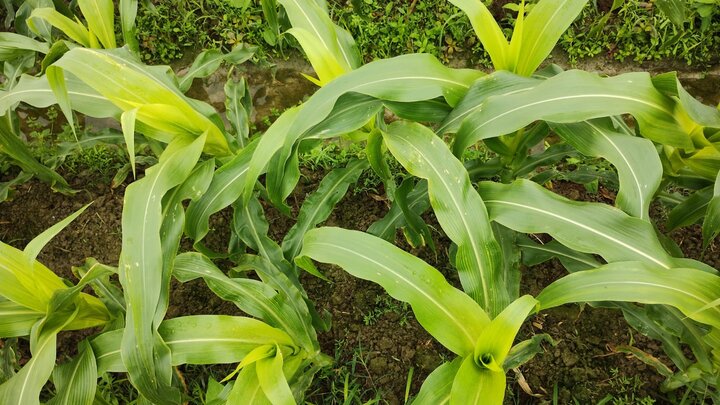
A deficiency in sulfur, an essential nutrient for plants, may be limiting crop yields in many regions around the world. The University of Nebraska-Lincoln, the University of Colorado, Boulder, the International Fertilizer Association and The Sulphur Institute are beginning a joint initiative to comprehensively communicate the extent and severity of the sulfur deficiency. The two-year project will compile global data on sulfur for major crop systems around the world – information that is key to inform public and private investments in agriculture.
Working with an extensive network of global partners, the team will help countries quantify and address sulfur deficiencies. That progress will help advance crop yields to meet the world’s growing food demand and reduce the negative environmental footprint associated with excessive fertilizer use in some regions.
This collaborative project “will provide essential information to improve crop production through better sulfur management and fertilizer recommendation,” said Patricio Grassini, professor of agronomy and horticulture at Nebraska and one of the project’s principal investigators. The project will ultimately benefit “a wide range of stakeholders, including farmers, researchers, policymakers and the private sector.”
“A high frequency of sulfur deficiency is expected nowadays due to several factors, including reduced atmospheric sulfur deposition, higher purity of fertilizers, higher crop yields with associated larger sulfur demand and loss of soil organic matter,” said Eve-Lyn Hinckley, associate professor of ecology and evolutionary biology at the University of Colorado, Boulder.
That combination of factors “could result in a situation where the soil cannot meet the sulfur required by crops, requiring the addition of fertilizers containing this essential nutrient,” said Ron Olson, senior agronomist at The Sulphur Institute.
Walter Carciochi, adjunct professor in agronomy and horticulture at Nebraska, and Connor Olson, University of Colorado, Boulder postdoctoral research associate, are coordinating the project’s outreach to a wide range of leading researchers in multiple countries to compile the needed data. They are also performing necessary modeling and analyses for the project.
“The current project will use an ensemble of methods to diagnose sulfur deficiencies, including on-farm nutrient balances, soil and plant analyses and sulfur omission trials,” said Carciochi. “The project will focus on major cropping systems in South and North America, South Asia, East Asia, Southeast Asia, Australia and Europe. We expect to find that sulfur is a limiting nutrient in many of these regions.”
The team will also perform “a global assessment of current sulfur fertilizer, deposition and balance which does not exist at present,” Olson added.
The International Fertilizer Association is “very excited to collaborate with the UNL and UCB teams led by Drs. Grassini and Hinckley on this global assessment of sulfur limitation,” said Achim Dobermann, chief scientist with the International Fertilizer Association and principal investigator of the project alongside Grassini and Hinckley. “This initiative starts not only from our interest as agronomists to help increase crop yields globally, but also as a demand from the fertilizer industry to identify new markets for sulfur.”
“We are currently in the initial stages of the project, actively gathering data to build the database,” Carciochi and Olson added. “We want to extend an invitation to colleagues in other universities, research institutes, analytical labs and companies to collaborate with this initiative by sharing any sulfur-related data they may have. This includes farmer data, fertilizer trials and soil and plant analyses. By synthesizing these data, we will be able to determine if sulfur is becoming the next barrier to increase crop yields.”
“It does not happen every day that a wide range of researchers from the public and private sectors collaborate effectively under the umbrella of a global project and the current project is a good example of such type of collaboration,” said Craig Jorgenson, president and CEO of The Sulphur Institute.